Why AI Agents Are Becoming Real Problem-Solvers
AI is no longer just helping you write emails or generate code snippets. It’s starting to act, decide, and complete tasks independently. The latest generation of models can execute multi-step workflows, use tools and software on their own, and solve complex tasks end-to-end without constant human input. This is not just an incremental improvement, but it represents a fundamental shift from AI as a tool to AI as an agent.
What Do We Mean by “Autonomous AI Agents”?
Traditional AI systems were largely reactive. You provide an input, the system generates an output, and then a human decides what to do next. Modern AI agents, however, behave very differently. They are goal-driven systems that can break down problems into smaller tasks, plan how to execute them, call tools or APIs, maintain context over time, and adjust their actions based on intermediate results.
In simple terms, instead of merely answering questions, these systems are capable of completing work. This aligns with the concept of agentic AI, where systems function more like “Digital Teammates” rather than passive assistants.
What Changed Technically?
This shift is not just the result of slightly better models; it is driven by architectural evolution. A modern agent system typically follows a layered approach that begins with a defined goal and moves through planning, tool usage, memory, execution, feedback, and governance. The planner determines the sequence of actions, tools enable interaction with real systems such as APIs or databases, memory preserves context, and execution performs the actual tasks. Feedback loops allow refinement, while guardrails enforce safety and compliance.
This architecture fundamentally transforms AI from a simple prompt-response mechanism into a system capable of structured reasoning and controlled autonomy.
Real Capability: From Tasks to Outcomes
The difference between traditional AI and modern agents becomes clear when comparing their capabilities. Earlier systems could generate a report draft, suggest code, or answer a query. In contrast, AI agents can read data from multiple systems, analyze it, generate insights, create reports, send updates, and even trigger downstream workflows, all within a single continuous process.
This is why enterprises are increasingly viewing AI not as a feature embedded in software, but as a workflow execution layer capable of handling end-to-end operations.
Why This Matters (Beyond the Hype)
One of the most important implications of this shift is that work itself is becoming automatable, not just assistable. Previously, AI improved productivity by helping humans complete tasks faster. Now, it can take ownership of entire segments of a workflow. Use cases such as customer support triage, DevOps monitoring and remediation, and finance reconciliation workflows are already moving in this direction. This marks the beginning of AI as an execution layer within enterprise systems.
Another major impact is the emergence of what can be described as “digital employees.” Organizations are no longer simply adopting tools; they are designing AI-powered workforce layers. Agents are being assigned roles, permissions, responsibilities, and even performance metrics, much like human employees. This shift is already influencing how systems and organizations are structured.
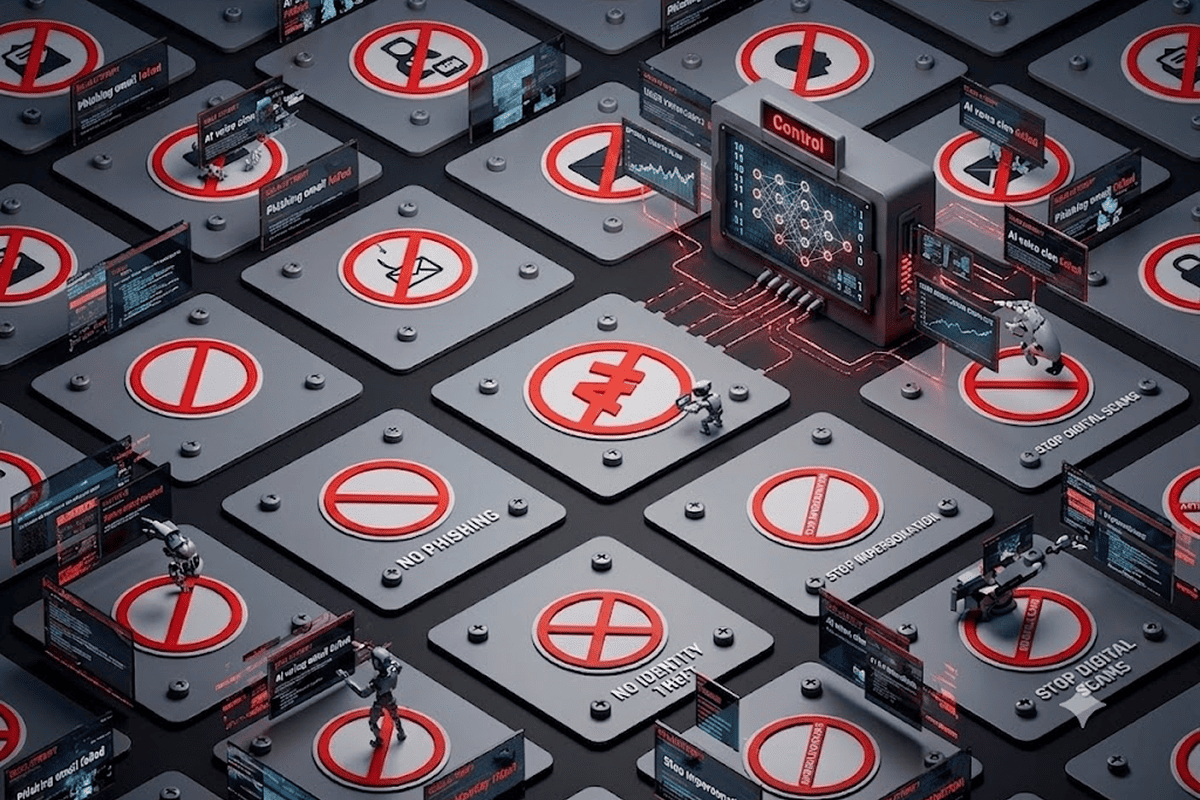
At the same time, system design is becoming more important than model selection. The key challenge is no longer choosing the best model, but defining what the agent is allowed to do. As AI systems gain the ability to act, the risk of unintended actions also increases. This is why governed architectures such as tool mediation layers and policy-driven decision systems are becoming essential for deploying AI safely in production environments.
The Hidden Challenge: Autonomy Without Chaos
With autonomy comes a new set of risks. One of the primary concerns is unbounded actions. Without proper constraints, agents may call incorrect APIs, trigger unintended workflows, or generate unnecessary costs. Another challenge is data dependency. AI systems are only as reliable as the data they operate on, and poor data quality can lead to poor decisions. No architectural pattern can compensate for fundamentally flawed inputs.
Security and integrity risks also become more critical. Research has shown that even a small number of poisoned data points can significantly alter model behavior, causing incorrect or harmful outputs under specific conditions.
What Production-Ready Agents Require
To move from experimental demos to production systems, organizations must focus on controlled autonomy. This begins with clearly defining decision boundaries: what the AI can do independently and what requires human approval. Policies must be enforced as executable code rather than static documentation, ensuring that constraints are applied consistently at runtime.
Observability is equally important. Every action taken by an agent must be traceable, including the reasoning behind it and the resulting outcome. Finally, human-in-the-loop design remains essential. Autonomy should be introduced gradually, with continuous monitoring and refinement, rather than deployed in an unbounded manner.
Where This Is Going
We are entering a phase where AI will no longer just assist workflows, but will execute them. This transition has far-reaching implications for software design, organizational structure, governance models, and cost optimization strategies. The real transformation is not simply about smarter AI, but about AI systems that can act with purpose and direction.
Final Thoughts
AI agents are not just a feature upgrade but they represent a new computing paradigm. The shift is from static tools and manual orchestration to autonomous systems capable of goal-driven execution. The organizations that succeed in this new landscape will not necessarily be those with the most advanced models, but those that can design systems with controlled autonomy, build reliable agent architectures, and treat AI as a managed workforce layer.