
Legacy systems are holding your business deliveries. Our Application modernisation and cloud migration service is not just about moving to the cloud, It is about “How your software delivers value”.
We help you to decouple monolithic legacy application into agile, scalable microservices and containerized architectures. If you are battling with technical debt, facing unmanageable cloud cost or need to scale instantly, we engineer the transition from “old stack” to “cloud-native”.
Our Offerings
Legacy-to-Cloud Modernisation
We help your legacy applications from outdated on premise stacks to modern stack with cloud environments. We re-architect your applications using modern languages and frameworks, and ensure security, maintainable and make it ready for high traffic demands.
Cloud Rescue & Cost Optimization
Don’t spend on Idle resources. We check your existing cloud infrastructure to identify waste of resources. Identify rightsizing of instances and refactor your existing application’s code and reduce spend and improve performance.
Microservices & Container Architecture
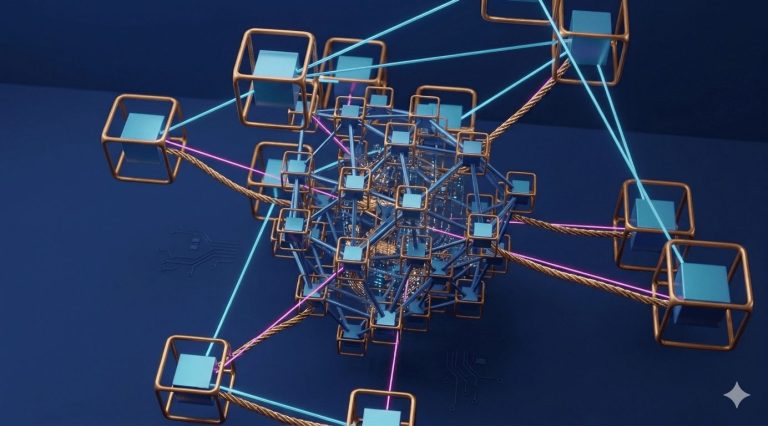
We break down your applications into independent and loosely coupled microservices wrapped in Docker/Podman containers. We use Kubernetes to orchestrating application. We ensure that your system can scale individual components based on demand, rather than scaling the entire heavy application.
Future-Proof Your Software Today
Most migrations just move the mess; we clean it up. From microservices orchestration to aggressive cost optimization, we ensure your cloud journey is lean, secure, and ready for high-traffic demands. Ready to see what your code can really do?
Our Approach
Assess & Audit
We start with understand your current code, database, and infrastructure to understand dependencies.
Define Strategy & Architecture
We design ROI focussed architecture that balance immediate wins(cost reduction)with long-term goals(scalability).
Agile Modernize & Migrate
We execute your migration in iterative sprints, this allows us to move functionality or module gradually without disrupting business continuity.
Optimize & Handover
We fine-tune auto scaling rules and train your team to manage the new environment confidently.
The Right Talent with the Right Tools
We integrate proprietary and leading AI technologies with the expertise of our senior engineers to maximize AI’s impact on requirements.


Benefits from Nirman Techlab
Eliminate Technical Debt
We patch old code along with refactor it to meet modern standards and making future updates faster and cheaper.
True Scalability
Move away from vertical scaling (buying bigger servers) to horizontal scaling (adding more containers) automatically.
Vendor Agnostic
We suggest the cloud strategy that fits your needs, whether it’s multi-cloud, hybrid, or a specific provider.
Security First
We take care of security into the migration pipeline and ensuring your new cloud environment is compliant from day one.
Frequently Asked Questions
What is the difference between lift-and-shift, re-platform, and re-architecture?
Lift-and-shift moves applications to the cloud with minimal changes fastest and lowest cost, but doesn’t leverage cloud benefits. Re-platform optimizes applications for the cloud (upgrading OS, databases) without redesigning balances speed and optimization. Re-architecture completely redesigns applications to use cloud-native services (containers, serverless, managed databases) highest investment but maximum cloud benefits. We assess your applications and recommend the right strategy sometimes a mix of all three depending on application requirements and business priorities.
How long does a typical cloud migration take?
Migration timeline depends on scope and strategy. A simple lift-and-shift might take 2-3 months. Re-platform migrations typically take 3-5 months. Full re-architecture can take 6-12+ months. We break migrations into phases typically starting with non-critical applications, learning lessons, then migrating critical systems. This phased approach reduces risk and allows you to benefit from cloud improvements incrementally while maintaining business continuity.
Can you migrate our applications without downtime?
Yes, for most applications. We use blue-green deployment, database replication with CDC (Change Data Capture), and DNS switching to minimize or eliminate downtime. For mission-critical systems, we can achieve zero-downtime migrations using techniques like parallel running, gradual traffic shifting, and connection pooling. The strategy depends on your application architecture and tolerance for risk. Some legacy systems with tight dependencies require brief maintenance windows, but we work hard to minimize disruption to your business.
What is blue-green deployment and why does it matter?
Blue-green deployment maintains two production environments blue (current) and green (new). You deploy to green, test thoroughly, then switch traffic to green. If issues arise, you instantly switch back to blue. For cloud migrations, we use this pattern to cut over from on-premises to cloud with minimal risk and almost instant rollback capability. Blue-green deployments are essential for enterprise applications where downtime is expensive. They give you confidence and speed you can migrate production traffic in minutes, not hours.
How can we reduce our AWS/cloud costs after migration?
Cost optimization is ongoing. We implement right-sizing (using appropriate instance types), Reserved Instances (long-term commitments), Savings Plans (flexible discounts), auto-scaling (paying only for what you use), and spot instances (for non-critical workloads). We optimize storage (tiering, compression), database engines (managed services are cheaper), and networking. We also conduct regular cost reviews and identify waste. Many companies see 30-50% cost reductions through optimization after migration. We treat cost management as part of ongoing support.
Is Kubernetes the right choice for our infrastructure?
Kubernetes is powerful but complex. It’s worth adopting if you’re running many containerized services, need sophisticated orchestration, or have high scaling requirements. For smaller applications or those with simpler architecture, simpler options (AWS ECS, managed services, serverless) might be better. Kubernetes requires operational expertise we assess whether your team has or can develop that capability. We don’t use Kubernetes just because it’s trendy; we recommend it when it solves real problems in your infrastructure.
What are the biggest risks of cloud migration and how do you mitigate them?
Top risks include security misconfiguration (we audit and enforce compliance controls), data loss (we implement backup/disaster recovery), performance degradation (we benchmark and optimize), and unexpected costs (we right-size and track spending). We mitigate through comprehensive planning, testing in staging environments that mirror production, security assessments, and phased rollouts. We maintain insurance-level safeguards backups, failover mechanisms, monitoring alerts. We also establish clear rollback procedures so you can revert if anything goes wrong.
How do you handle data security and compliance during migration?
Data security during migration is non-negotiable. We encrypt data in transit (TLS, VPN), at rest (encryption keys), and in cloud storage. For regulated industries, we ensure compliance with GDPR, HIPAA, PCI-DSS, or other relevant standards. We use secure data transfer services (AWS DataSync, secure VPN tunnels). We maintain an audit trail of all data movements. We work with your compliance team to validate that migration meets security requirements. Post-migration, we configure cloud security services (VPC, security groups, WAF) and ongoing monitoring.
What is the ROI of application modernization?
ROI from modernization comes through multiple channels: reduced infrastructure costs (30-50%), faster deployment cycles (from months to weeks), improved reliability (reduced outages and support costs), ability to scale dynamically, and faster feature delivery. For AI/ML integrations, modernized platforms enable new capabilities and revenue streams. Most companies achieve ROI within 18-24 months. We model specific ROI during assessment analyzing your current costs, expected savings, and revenue implications. The business case for modernization is usually strong once you quantify the benefits.
How much does cloud migration cost for mid-size companies?
Cloud migration costs depend on application complexity, data volume, and migration strategy. This includes infrastructure assessment, architecture design, application refactoring, data migration, testing, and cutover. Most companies see cost savings of 20-40% after 12-18 months through reduced infrastructure expenses and operational efficiency. We provide detailed cost estimates after assessing your current infrastructure and target requirements.