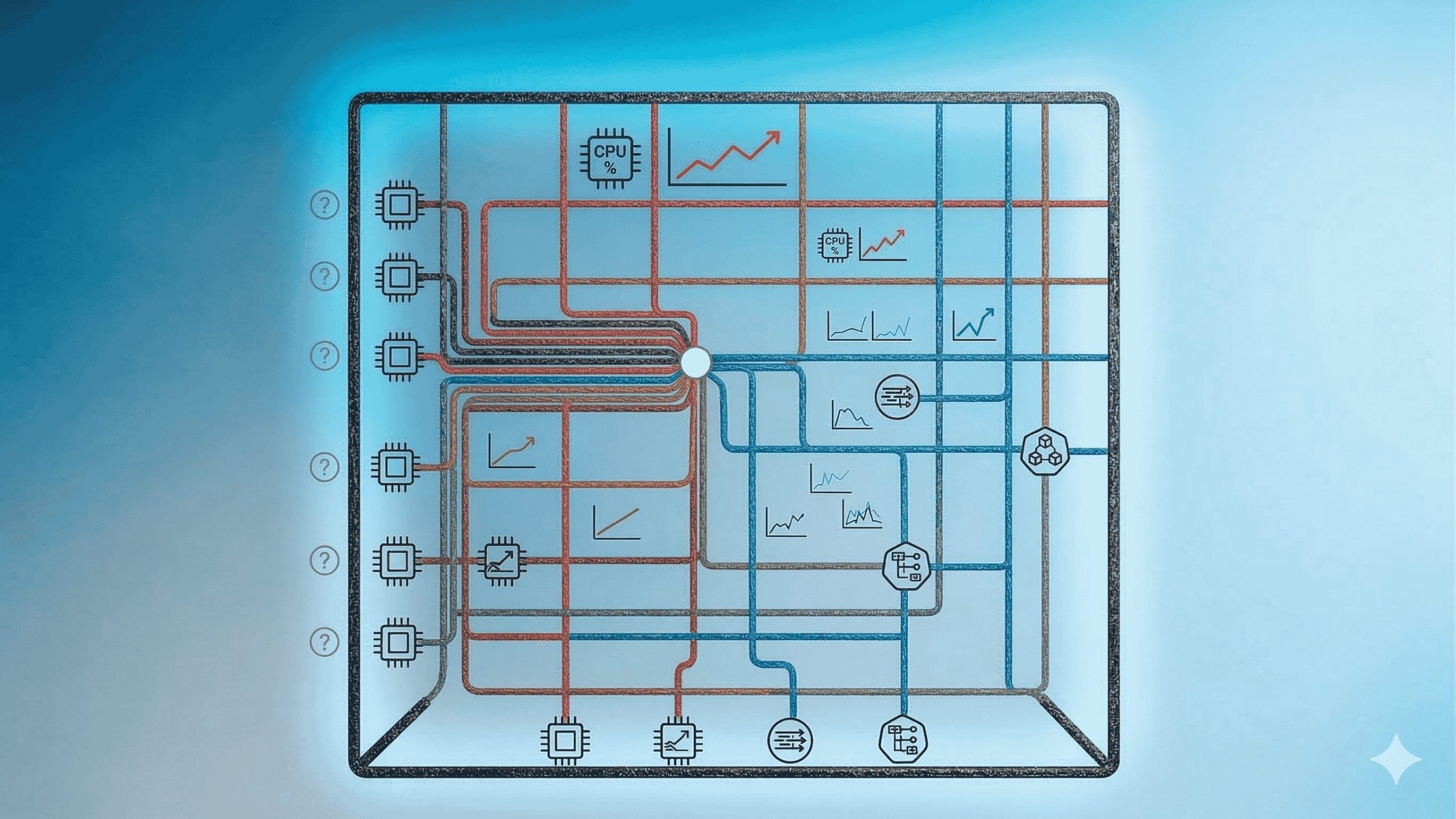
From messy multi-cloud bills to 22% lower spend with FOCUS 1.3
Overview
Client Introduction
A fast-growing digital marketplace company running customer workloads on AWS + Azure, with analytics and batch workloads on GCP, and a modern platform layer built on Kubernetes. Their growth was strong, but cloud spend visibility and accountability were not.
The Big Picture
The client needed a Cloud Rescue program that could do two things at the same time: 1) Reduce waste quickly, and 2) fix cost clarity permanently so leadership could forecast and shared/platform costs wouldn’t disappear into “unallocated” status.
We led a FinOps-led cost optimization initiative and adopted FOCUS (FinOps Open Cost & Usage Specification) 1.3 to normalize multi-cloud cost and usage data into one consistent language.
Quick Stats (12 Week Program)
- 22% reduction in monthly cloud spend (net)
- 92% allocation coverage (up from 55%)
- <24 hours data freshness for spend dashboards (down from ~10–14 days)
- ~40% reduction in “shared/unallocated” costs after split allocation rollout
Challenges
Primary Challenge
The cloud cost was growing every month, but the organization lacked a reliable view of who owned which costs and why costs changed. Especially across shared platform services and commitment-based discounts.
Why This Mattered (Business context)
Finance struggled to produce stable, defensible cloud spend forecasts because the underlying cost data was inconsistent and ownership attribution was weak. As a result, engineering teams spent more time debating the accuracy of cost reports than acting on optimization opportunities, which slowed down corrective work and created friction between teams. At the same time, platform spend repeatedly appeared “too expensive” on paper, not because it wasn’t delivering value, but because it wasn’t clear which products and teams were benefiting from shared services, making the bill look like a pure overhead line item. With unit economics unclear and shared costs poorly allocated, leadership lacked the confidence to invest in scalability initiatives, since they couldn’t reliably estimate the cost impact of growth or separate necessary scale costs from avoidable waste.
Technical Challenges (What was breaking cost clarity)
1) Inconsistent billing datasets across clouds
AWS, Azure, and GCP export cost data differently. Like field names, units, discount representations, and service taxonomies didn’t line up, making “one dashboard” unreliable without heavy manual transformation. FOCUS exists specifically to normalize these datasets across vendors.
2) Shared costs were “everyone’s problem = no one’s problem”
Kubernetes clusters, NAT gateways, shared databases, shared observability tools, and platform namespaces created large bills that weren’t directly taggable or attributable to a single team.
3) Commitments & discounts were not traceable to owners
Savings Plans / Reserved Instances / commitments reduced spend, but the benefit wasn’t allocated back to consuming teams. Leading to wrong “unit cost” reporting and internal mistrust.
4) Data freshness gaps (late reporting)
By the time reports arrived, teams couldn’t connect spikes to deployments, traffic events, or misconfigurations. FOCUS 1.3 explicitly addresses recency/completeness concerns as part of improving trust in billing data.
5) Tagging and metadata governance was weak
Many resources lacked consistent ownership metadata (team, environment, product, cost center). Tagging is foundational for cost allocation and accountability, but it only works if it’s enforced consistently.
Strategy
Strategic Approach Overview
We treated this like a rescue mission with two tracks:
Track A — Fast savings (first 2–4 weeks): Stop the bleeding with immediate optimizations.
Track B — Permanent clarity (weeks 3–12): Standardize cost data using FOCUS 1.3, build allocation logic for sharing cloud platforms, and put governance in place so the same chaos wouldn’t return.
FOCUS gave us a shared schema and terminology to build a consistent cost layer across cloud vendors, instead of maintaining three different reporting systems forever. FOCUS 1.3 specifically added stronger support for split allocation, contract commitments, and data freshness.
Solution Architecture (Layer-Based Breakdown)
1) Data Ingestion Layer (Multi-cloud exports)
In this layer, AWS cost and usage data is ingested using a CUR-style export flow, Azure data is collected via Cost Management exports, and GCP spend is captured through billing export datasets. Where needed, the same ingestion stream can also include optional SaaS invoices such as observability, CI tools, and security platforms.
2) Normalization Layer (FOCUS 1.3 mapping)
Here, provider-specific columns are mapped into a FOCUS-aligned dataset to ensure common dimensions, consistent naming, and unified metrics across clouds. We also add trust signals for recency and completeness so stakeholders can clearly see which data is fresh and which is still landing.
3) Allocation & Chargeback Layer (The “Cloud Rescue” engine)
This layer applies a policy-driven allocation model where direct allocation is handled through tags and labels such as team, product, environment, and cost center, while shared services are split using usage-based signals like CPU, memory, network egress, requests, and namespaces. Commitment benefit allocation is also applied so savings and discount benefits flow back to the actual consumers, ensuring unit costs reflect reality rather than only gross spend, because cost allocation depends on consistent metadata strategy and collaboratively defined ownership rules.
4) Optimization Layer (Action, not dashboards)
The optimization layer focuses on execution by implementing rightsizing and autoscaling guardrails, enforcing non-production scheduling, applying storage lifecycle and retention policies, reducing data transfer and egress, and rebalancing commitments by buying the right commitments instead of simply buying more.
5) Reporting & Governance Layer
In this layer, unified multi-cloud dashboards provide drilldowns from organization to product to team to service to resource, supported by a monthly showback process and quarterly chargeback readiness. Tagging standards are maintained through an enforcement playbook that combines policy and CI checks to keep allocation accuracy stable over time.
Key Technical Decisions (What made it work)
Why FOCUS (instead of a custom schema)?
Because custom schemas become brittle and expensive. FOCUS is designed to normalize cost and usage across cloud/SaaS/on-prem vendors so organizations don’t reinvent the same mapping logic repeatedly.
How we handled shared Kubernetes costs:
We split cluster and platform-layer costs by measurable usage signals (namespaces, labels, CPU/memory requests, and traffic patterns), then pushed results into the unified cost model so teams saw platform costs as their share, not an abstract central bill.
How we handled commitments:
FOCUS 1.3 supports more robust commitment tracking and reporting constructs, enabling clearer allocation of commitment impact and discount benefits.
Results
Impact Summary
Within 12 weeks, the client moved from “multi-cloud cost chaos” to a repeatable FinOps system with measurable savings and trusted reporting.
Quantitative Outcomes
Cost Optimization (Business Impact)
Cost optimization delivered a 22% net reduction in monthly cloud spend, driven by a 15–20% reduction in non-production waste through scheduling and cleanup, and an 8–12% reduction in compute waste through rightsizing and autoscaling guardrails. We also achieved a material reduction in data transfer and egress costs after improving traffic routing and implementing caching fixes.
Cost Clarity (FinOps Impact)
Cost clarity improved significantly as allocation coverage increased from 55% to 92%, while the “shared/unallocated” category dropped by approximately 40% after the split allocation rollout. Commitment benefits also became visible at the team level, eliminating the old “finance-only discount bucket” and making unit costs more accurate and trusted.
What Changed (Before vs After)
Before:
Teams spent hours debating whether the bill was correct, and platform costs were treated like unavoidable overhead.
After:
Teams saw unit costs (per product/service/team), understood shared cost drivers, and had clear levers to reduce spend without breaking reliability.
Stakeholder Feedback (Client Voice)
“Earlier we used to argue about whose cost is whose. Now we argue about what to optimize first—which is a much better problem.”— Head of Engineering Enablement
“Forecasting is finally stable. We can explain spend changes with confidence, not assumptions.”— Finance Controller
Long-Term Value
This created a standardized billing foundation that can scale smoothly as new vendors and tools are added, while establishing clear accountability that supports real chargeback when the organization is ready. It also enables faster optimization cycles because cost and usage data arrives in time for teams to act quickly and confidently.
FAQ
1) What is FOCUS, and why did we use it?
FOCUS (FinOps Open Cost & Usage Specification) is an open specification that normalizes billing datasets across cloud and other technology vendors so teams can analyze and manage costs consistently. We used it to avoid maintaining separate reporting logic for each provider and to build a single source of truth.
2) What’s special about FOCUS 1.3 for multi-cloud cost rescue?
FOCUS 1.3 targets real-world FinOps pain points like shared cost splitting, commitment tracking, and data freshness/completeness. These are all critical when your biggest costs come from shared platforms and long-term discounts.
3) How did you ensure tagging/labeling didn’t fall apart again?
We created a tagging standard (required keys like team/product/env/cost-center) and implemented enforcement checks. Tagging and metadata governance are foundational for cost allocation and showback/chargeback practices.
4) What was the approach to security and access control for cost data?
We applied least-privilege access to billing exports and dashboards, separated finance vs engineering views where needed, and ensured sensitive identifiers were masked in broad dashboards. Audit logs were retained for governance and compliance reviews.
5) How long did it take to see savings?
Quick wins landed within the first 2–4 weeks (scheduling, cleanup, obvious waste). Larger gains came after shared cost allocation and commitment visibility improved, because teams could finally target the real cost drivers.
6) What happens next (Future Outlook)?
Next, we will expand the FOCUS-based model to include SaaS and data platform spend to achieve full “technology cost of goods” visibility, and move from showback toward chargeback-ready reporting wherever organizational maturity supports it. We will also add automated guardrails such as budget alerts, anomaly detection, and pre-deploy cost impact checks to prevent cost issues before they scale.